Friday, 28 June 2013

Seek and destroy: Invasive plant species

Sherborne brook, yellow monkey flower on south bank

Working with the Sherborne volunteer 'team' this week, some of whom also appear in the Wildlife Trust team. Our task today was to survey the Sherborne Brook from the village all the way down to the Water Meadows and including both channels of the Brook as it divides before eventually joining up at the river Windrush. The main task was to search for and if possible remove invasive plant species but it also offered an opportunity for spotting interesting plants and wildlife. The weather was pretty good and the terrain interesting. The stretch of the Brook adjacent to the village provided much interest. We divided into 2 teams and on our North side of the Brook no invasive plants but some Marsh, Common, Pyramid orchids plus long tailed tits. On the other bank, above the weir, however the Monkey flower had taken hold in patches which was keeping team 2 busy. We crossed over to help before heading back downstream towards the boat house, see picture above. More Monkey flower discovered again on the south bank plus a viewing of our heron, the swan family {9 cygnets}, 2 red kites, reed bunting and some large trout. The terrain changed dramatically past the boat house and lower weir into more of a 'jungle'. Here we hit Japanese Knot weed {although much reduced after last years work} and Butterbur. Since we were in the vicinity we popped into look at progress of the archeological dig. Unfortunately the findings   were not confirming the presence of a medieval church and at this time was proving to be a 'medieval mystery'.  The afternoon survey revealed little evidence of invasive plants apart from a small section of Butterbur which was duly noted on our map for later treatment. No Himalayan Balsam was seen in this survey but we hadn't time to cover the river Windrush which has this invader upstream, certainly in the Bourton area. An interesting walk though, by the clear swift flowing Brooks, again with plenty of trout on show. It was also good to see the 3 man made otter holts but no evidence as yet of resident otters.

Damselfly, Banded variety

Today was spent with the Wildlife Trust team on a section of the river Churn in Cirencester, again on tackling invasive plants, the Himalayan Balsam dominating proceedings.  The terrain was challenging with thick plant growth along the river and it also provided me with my first experience in 'waders'. On the plus side it was certainly cooler wading down the river on the trickier stretches of bank but they do make you overheat quickly in the warm June air. The first part of the session required more 'seeking' as we covered an area which had been covered earlier in the week. As we progressed down river  the amount of Balsam mounted dramatically along with the physical effort of removing so many plants and so by close of play it was clear another session would be required to remove the remaining plants. Not quite as pleasant an environment as Sherborne but it did provide a good showing of Damselflies : an impressive Broad bodied Chaser {as seen at Lodgepark} plus Banded , Emerald, Beautiful Demoiselles.

Wednesday, 19 June 2013

Back in the saddle

Two for one at Greystones

Fit-ish again so attended a Wildlife Trust session at Birdland Bourton removing Balsam, an aggressive annual which has a sizeable impact on more beneficial existing plant life. Good to be doing conservation stuff again with the enthusiastic volunteer team led by Will & Richard. It was a short task {primarily because of the good work done last year} and the work completed not long after midday. As  Greystones nature reserve was not far away I decided to pop in and see if I could spot a water vole or two on the river Eye. I enjoyed a relaxing walk through the meadows where the plant growth was impressive since my last visit. The only wildlife I spotted consisted of three springer spaniels enjoying a dip into the river Eye to retrieve the balls their owner had thrown there. I followed the path by the river Eye back to Greystones but no sign of water voles although I did spot some impressive looking blue dragonflies though, the demoiselles . Quite close to the reserve boundary and the Mink platform, just before I was about to turn away from the river,  I was served up with an even better treat. Sitting on a dead branch which jutted out over the river was not one but two Kingfishers. They allowed me to observe them with my binos but drew the line at the point I tried to reach for my telephoto. No complaints from me and a great way to end the day.


7 of 9 not Star Trek Voyager, but Sherborne style!

Lots to catch up with today at Sherborne after my enforced break. It was to prove a very hot day starting in the morning with gardening duties at 61 and then Northfields car park. Was treated to an interesting break when Mike took me over to the recently started Archaeological dig at the East end of the village. Work had progressed well on revealing the foundations of what looks like the Saxon church {1300s} which marked the initial beginnings of medieval Sherborne! Look forward to seeing the output from this work due to complete 30 June. Bumped into Richard and John from the Wildlife Trust where Mike exchanged more current news with them before they left to continue their good work in the water meadows. Lunchtime proved to be another bonus down by the Sherborne brook. While I had been away the swans had been busy with 9 cygnets an impressive outcome. They were naturally wary of my presence but allowed me to take a few pics. Not to be outdone one of the Tufted duck pairs were showing off their 7 chocolate brown chicks. Further upstream a heron was busy fishing and as I looked into the clear water up by the weir there were some large trout all good news if you like fish. On the way back from lunch a red kite provided a low fly by over the field by the brook, not a bad lunch break for wildlife.

Guilty of malicious damage!


Tree guards for the new elms
Following lunch, after some good local engagement consultancy with one of the villagers, we were to carry on the work Mike had begun on building tree guards for the Elms we planted before my injury. Amazingly local sheep had taken a fancy to some of the 'unguarded' Elms , eaten through the tree protectors and then the Elm saplings. Not what was expected from sheep so priority on getting the tree guards in place had risen to the top of the list. The hot weather , an unhelpful Maddie and biting insects all helped to increase the challenge in this work so still plenty left to do. Ended the day back at the Sherborne offices where I took in the newly completed restoration of the dry stone wall, scaffolding still to be removed.


Wednesday, 22 May 2013

The grass 'is' greener on the other side!

Littleworth wood viewed from Snowshill Manor

Sadly no NT work experiences this week, and for as yet an undetermined period, as I appear to have damaged a tendon connected to my right knee (this to be confirmed by the Dr today).  I may have made this unexpected injury worse by working at Snowshill Manor on Sunday but hindsight is a wonderful thing. Sunday did however provide two new experiences. One was working with the Coventry garden volunteers which was rewarding and the second involved some animal husbandry. This involved escorting a rogue goat off the premises and back to its mate on an adjoining property. Helped by Katie we scrambled down the shelter belt, crossed a small stream, gently pulling the goat with us, and then lifted the goat over the boundary fence back into its field. There was no doubt the grass in its field was inferior to ours so no surprise that it had, via an as yet undetermined route , decided to pay Snowshill Manor a visit!

In the ongoing 'bee' saga and 'neonics' I thought this NT blog {NT Pressoffice} provides a good perspective, especially why is the temporary ban only 2 years when this particular pesticide lingers around for ~4 years. Slightly odd connection with the Chelsea flower show but this NT blog reminds us of the ongoing threat to our trees.

Thursday, 16 May 2013

The Blues: British or Spanish


Lynches wood, British blues

Orchid, Littleworth wood
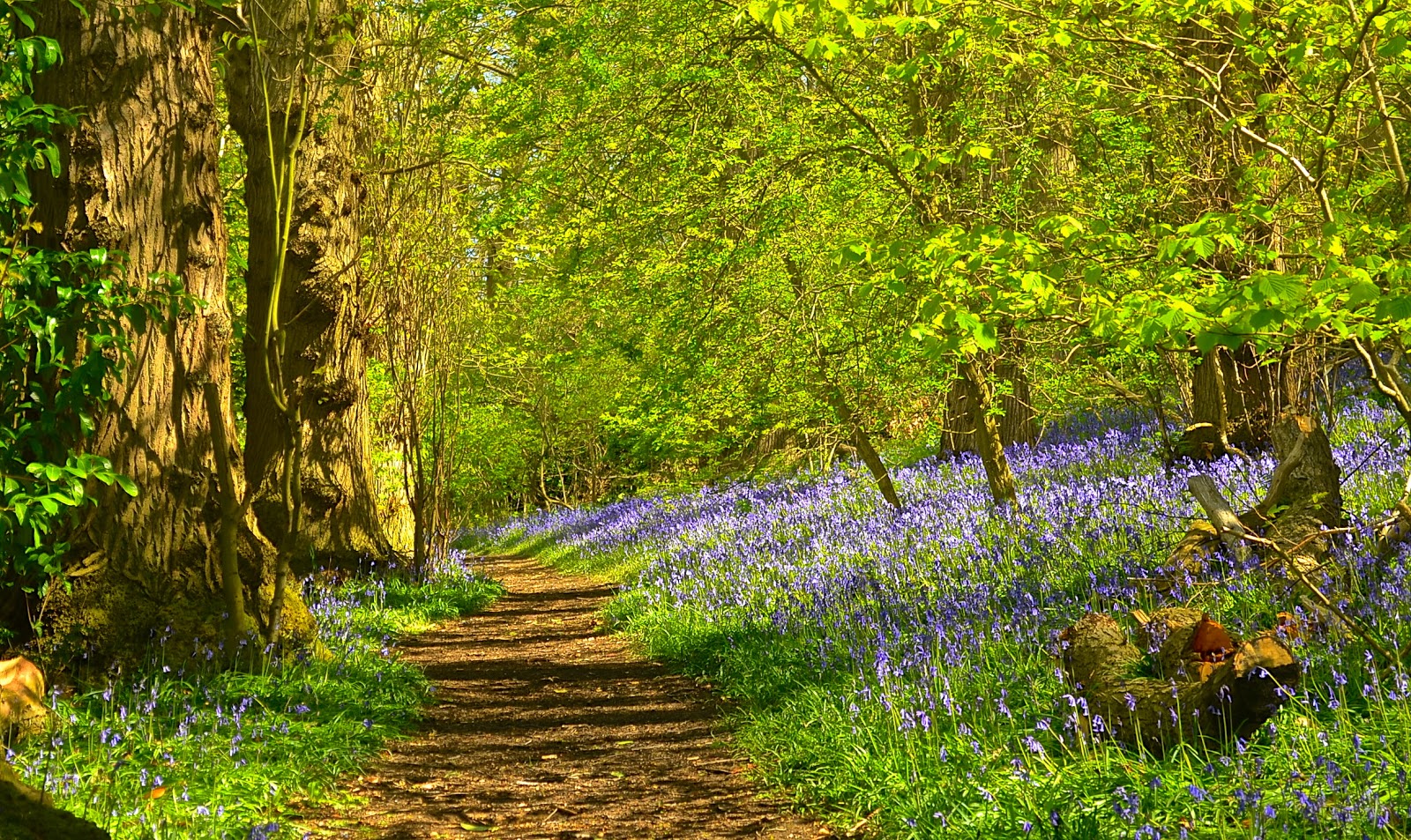
While Mike is enjoying the Irish sun I took the opportunity to seek out this seasons bluebells. Usually the best time for seeing the bluebells is much earlier in April plus this year, having seen the invasion of Spanish Bluebells which includes my garden, I was curious to see how the British Bluebell was faring in the NT woodlands. I chose Dovers Hill,  Lynches wood,  followed by Littleworth wood as I was confident my best chance of a good showing would be at these locations. I may get some stick from Mike but I wasn't sure of the best spots at Sherborne.

Amazingly I was greeted by sunny skies at Dovers Hill and was certainly not disappointed by the display of British bluebells in Lynches wood. It was also good to see the Sweet Chestnut trees which feature strongly in this woodland and alongside one of the paths, form an impressive avenue. So a good start to the day and I was in good heart as I headed for Stanton village where I would use the footpath from the Mount at Stanton {good pub} to head up the hill towards Littleworth wood. Again the British bluebells were on display but not quite the numbers at Lynches wood. To make up for this there were a good number of orchids on show and it was also good to see that another 'compartment' for conservation had been erected since I last worked here. So enjoyed another woodland walk and couldn't resist having  quick look at Snowshill even though I will be working there this Sunday. I grudgingly returned to Stanton where I forced myself to take some refreshment at the Mount which was a pretty good way of ending a satisfying day.

Snowshill, from Littleworth

Liked this guest blog concerning the NT and I can certainly relate to the countryside conservation observations. So has the NT got the balance wrong between recreation over conservation,  its current strategy has meant less resources for conservation. This doesn't mean there is an absence of conservation. I personally have enjoyed and observed the past work of the NT Rangers in: woodland management , hedge building, planting, water meadow restoration tasks {sometimes in partnership with the Wildlife Trust}. There's just not enough done and doubts about sustaining the good work carried out mount.

Wednesday, 8 May 2013

Resistance, hopefully isn't futile

Moor's Copse looking towards Sherborne village

Last years planted hedge, Northfield Copse on the horizon
Later start today, but fair weather contrary to expectation after a hot bank holiday and one of my favourite tasks to look forward to! This was especially true since we were to spend the whole day planting Elm trees which were of a strain which is hopefully resistant to Dutch Elm disease. Part of the work was selecting the best sites for planting the Elms. This included locations in some of the hedges planted over the last 1- 10 years and open pastures near to dead or dying trees ensuring the landscape retains its impressive looks. The location of each of the trees planted was recorded along with the 'root stock' so in the future it will reveal how well the particular Elm strains have fared.

There were 6 sites visited during the day and the first was a hedge line {~5 years old} on the northern borders of the estate close to Northfield Copse but on the Leasow Furlong side of the road. We next crossed over the road and planted the next Elms in the hedge built last year which has Northfield Copse at one end and Clark's Close at the other. Next was new hedge 2 and then a hedge line backing onto a paddock {with 2 friendly young horses} which was adjacent to Crookmoor Ash. On route we passed along the edge of Sandy Hill Copse with view of Sandy hill farm and the North West boundary of the estate. Quite a bit of scrambling for me over the Hedge fence lines some with barb wire and plenty of maturing thorny Hedge to restrict my comfort zone as I dug the holes to receive the Elm trees. 

The afternoon offered a change in approach where the locations were 2 fields used for sheep pasture the first down from Crookmoor Ash/Clark's  Close and the second next door and down from Moor's Copse with some splendid living Oaks and some dead ones providing good habitat for insects and lambs!.  Only had time to plant the Elms with tree protectors, in strategically chosen locations, the tree guards needed to defend against livestock would be the next task when Mike returns from holiday. Twenty splendid Elms were planted today a worthy effort and an enjoyable experience in some of the best scenery provided by the Sherborne estate . 

Wednesday, 1 May 2013

Scorchio!

Whiskered bat with water crystals attached!

Lesser Horseshoes, no flash allowed
 A day to savour and for once our weathermen got a prediction right, with sunny cloudless skies dominating. Morris beat me to Sherborne, fresh from his Barcelona break, and with Mike we headed up to the bat cave for the delayed April bat count. As ever my predictions on numbers were wide of the mark but none of us expected the overall numbers found at the bat roosts we survey at Sherborne. So the bat cave winter roost still had 126 lesser horseshoes plus 1 whiskered, the Kennels had an impressive 45 lesser horseshoes, the bothy still 0 but the Cellars in the nursery a magnificent 40 lesser horseshoes : A grand total of 212 a new record for Sherborne. In the Cellar summer roost there was even evidence of mating so we may have some little bats flying around soon, so all in all excellent news for our bat population. For once the temperature inside the bat cave was cooler than outside which was quite pleasant given the increasingly warming weather outside. Another bonus during the morning was that the excellent weather brought out several butterflies {peacocks, cabbage white, brimstone and a large turquoise } and not to be outdone the birds got into the act with swallows, house martins, raven, buzzards, tits and linnets amongst others enjoying the day.

Unfortunately had to 'earn my keep', so in the hottest part of the year so far,  the afternoon had me splitting wood in the nursery followed by a rapid trip up to Lodge Park for the first mowing of the lawns for the coming bank holiday, Mike operating from the Kubota. Not much life discovered in the Lodge pond yet but hopefully the warmer weather will soon remedy this with more of what we saw last year to come.

Ended the day with a quick visit to the newly planted hedges at Sandy Hill and Clarks Close and was pleased to see some 800+ hedge plants all in place and protected from the local wildlife to enable 2 healthy hedges to develop over the next few years.


Hedge 2, with Sandy Hill at one end

Hedge1, alongside Sandy Hill with Clarks close in the distance

Wednesday, 24 April 2013

Hedge sitting

Hedge 2, view from Clarks Close towards Sandy Hill Copse

Dead tree makes fine den for sheep, looking over Sherborne
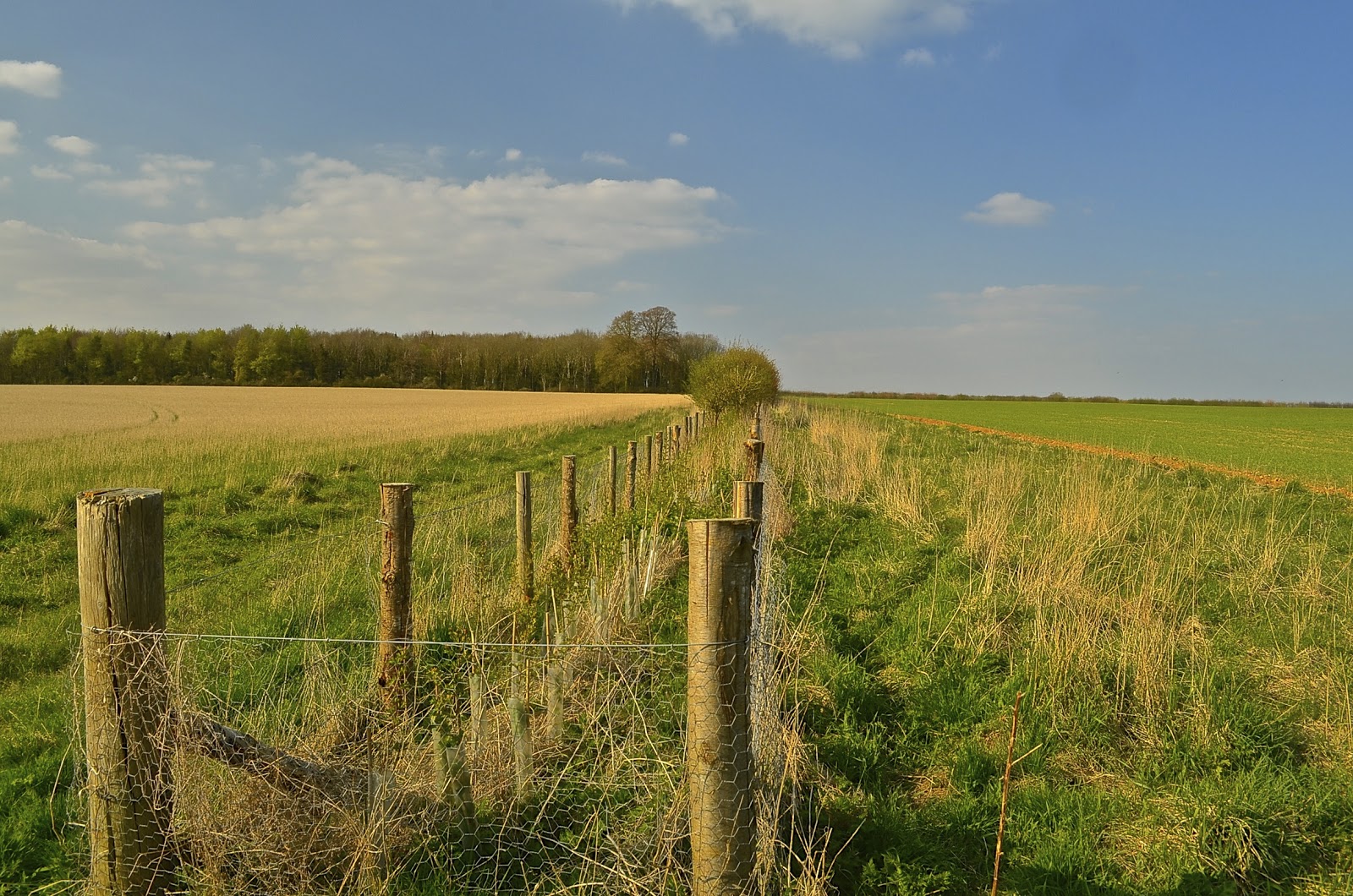
Last minute changes meant no Bat count this week, Mike occupied in the morning with meetings and me flying solo on Hedge duty. So I was challenged with completing the Chicken fencing for Hedge 2 and this meant tackling the existing thorny sections from the remains of the original hedge, some 200+ years old. It also was to be my turn in joining up the 3 sections of chicken fencing needed for this 120+ metre run and this proved tough on my fingers! On the plus side there are worse places to spend your time with great views over the Sherborne village and park land. The sheep proved entertaining expecting food every time I moved the 4x4 plus their many lambs were clearly enjoying the fine weather and freedom to play. Had a quick lunch break visiting Sandy Hill copse and was impressed with the Douglas firs that exist there.

Mike joined me in the afternoon and while I finished off work on Hedge 2 he set to on planting the blackthorn, hawthorn and hazel for Hedge 1. I joined him later on in the afternoon to help in the planting. True to form I hit a rocky section for my first plantings which brought back memories of planting ash saplings in the East Belt. Fortunately it did get easier although Mike's rate of planting was as usual a good deal faster than mine! Still, pretty good progress was made and Hedge 1 was well on the way to completion by close of play. With the volunteer group in tomorrow there was every chance for completing the planting for Hedge 1 and Hedge 2. Overall a pretty good effort in constructing 2 new Hedges, all we need now is some reasonable rainfall to help establish the new Hedge plants.